
LG vs Dyson vs Xiaomi Air Purifier Malaysia
Three brands dominate air purifier searches in Malaysia — LG, Dyson and Xiaomi. We compare them on filtration, noise, price, maintenance and smart features so you can decide which one fits your home.
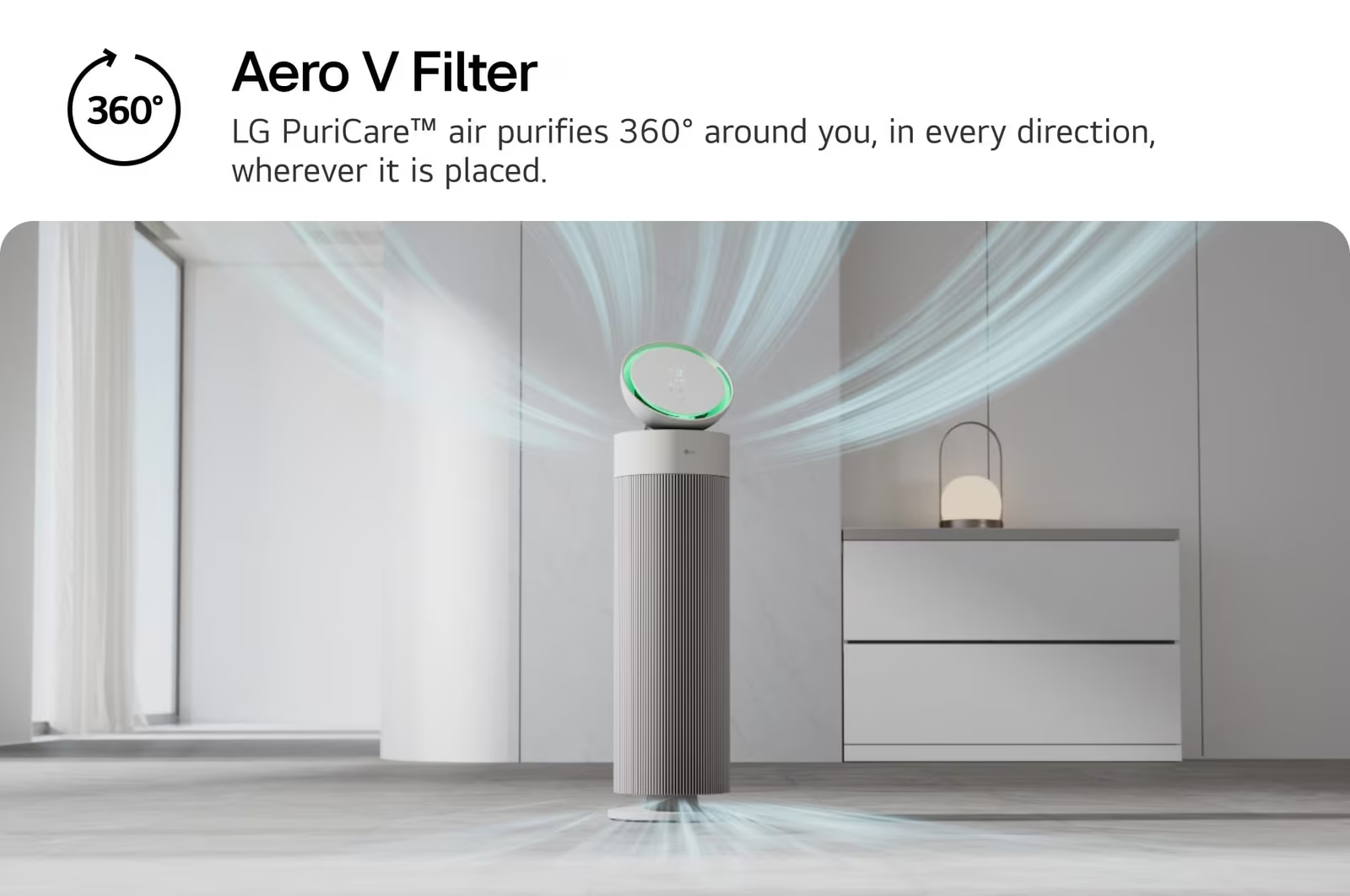
LG, Dyson and Xiaomi are the three air purifier brands that Malaysian buyers search for most often. Each takes a different approach to filtration, pricing and design, and each has clear strengths. This comparison lays out the differences across the factors that matter most — so you can choose the brand and model that fits your home, your budget and your indoor air quality needs.
The three brands at a glance
LG PuriCare focuses on HEPA filtration with smart sensors, and is the only brand among the three that offers a full subscription model in Malaysia — no upfront cost, maintenance included, filters replaced on schedule.
Dyson combines air purification with bladeless fan technology and, in some models, heating. The design is distinctive and the engineering is refined. But the price point is high, and filter replacements are entirely on you.
Xiaomi targets the budget end of the market with simple, effective HEPA purifiers controlled through the Mi Home app. The upfront cost is low, but the feature set and build quality reflect the price.
Filtration compared
| Feature | LG PuriCare | Dyson | Xiaomi |
|---|---|---|---|
| Filter grade | H13 HEPA (all models) | H13 HEPA (most models) | H13 HEPA (select models), E12 (budget) |
| Carbon filter | Yes (deodorising layer) | Yes (activated carbon) | Yes (activated carbon on most) |
| UVnano sterilisation | Yes (AeroBooster, AeroFurniture) | No | No |
| BAF allergy certified | Yes (AeroBooster) | Yes (select models) | No |
| Ioniser | Yes (360 HIT, Alpha Pet) | No | No |
All three brands offer H13 HEPA on their mid-range and premium models. The difference is in the secondary filtration layers. LG adds UVnano sterilisation on the AeroBooster and AeroFurniture, which kills bacteria on the fan blades and air outlet — something neither Dyson nor Xiaomi offers. Dyson's sealed filtration system is well-engineered, with the entire airpath designed to prevent leaks around the filter. Xiaomi keeps things simple — a cylindrical HEPA-carbon combo filter that slots into the base.
For Malaysian haze protection, all three brands at the H13 level will handle PM2.5 effectively. The LG and Dyson models offer more advanced secondary filtration, while Xiaomi delivers the basics at a lower cost.
Coverage and CADR
| Model | CADR (approx.) | Coverage | Price |
|---|---|---|---|
| LG 360 HIT | ~380 CMH | 61.2 m2 | RM50/mo |
| LG AeroBooster | ~411 CMH | 52.8 m2 | RM65/mo |
| Dyson TP07 | ~290 CMH | ~35 m2 | ~RM2,800 outright |
| Dyson HP07 | ~290 CMH | ~35 m2 | ~RM3,500 outright |
| Xiaomi 4 Pro | ~500 CMH | ~60 m2 | ~RM700 outright |
| Xiaomi 4 Lite | ~360 CMH | ~43 m2 | ~RM400 outright |
Xiaomi leads on raw CADR per ringgit — the Xiaomi 4 Pro moves more air than any unit in this comparison and costs a fraction of the others. However, CADR alone does not determine real-world performance. Noise at high speed, filter seal quality, and sensor accuracy all affect how well the purifier performs in daily use.
LG and Dyson offer better room coverage consistency because their sealed airpaths and multi-directional air distribution ensure purified air reaches all corners. Xiaomi's top-discharge design is effective but can leave dead zones in larger rooms.
Noise levels
| Model | Minimum noise | Maximum noise |
|---|---|---|
| LG 360 HIT | 20 dB | ~52 dB |
| LG AeroBooster | 21 dB | ~52 dB |
| Dyson TP07 | ~30 dB | ~62 dB |
| Xiaomi 4 Pro | ~30 dB | ~64 dB |
LG wins on minimum noise. The 360 HIT at 20 dB and the AeroBooster at 21 dB are quieter than a whisper — suitable for light sleepers and nurseries. Dyson and Xiaomi are louder at minimum speed, and significantly louder at maximum. If the purifier is going in a bedroom, this difference matters every night.
Price and total cost of ownership
This is where the comparison gets interesting. The three brands use completely different pricing models.
Xiaomi: lowest upfront, maintenance on you. A Xiaomi 4 Pro costs approximately RM700 outright. Replacement filters cost RM100-150 each and should be changed every 6-12 months. Over 5 years: ~RM700 + RM750-1,500 in filters = RM1,450-2,200 total.
Dyson: high upfront, maintenance on you. A Dyson TP07 costs approximately RM2,800 outright. Replacement filters cost RM250-350 each and should be changed every 12 months. Over 5 years: ~RM2,800 + RM1,250-1,750 in filters = RM4,050-4,550 total.
LG Subscribe: no upfront, maintenance included. The LG 360 HIT at RM50/month over 84 months = RM4,200 total, with every filter replacement, warranty claim and maintenance visit included. The AeroBooster at RM65/month over 84 months = RM5,460 total with the same inclusions.
| Brand/Model | 5-year total cost | Filters included | Warranty |
|---|---|---|---|
| Xiaomi 4 Pro | RM1,450–2,200 | No | 1 year |
| Dyson TP07 | RM4,050–4,550 | No | 2 years |
| LG 360 HIT (Subscribe) | RM3,000 (60 mo) | Yes | Full term |
| LG AeroBooster (Subscribe) | RM3,900 (60 mo) | Yes | Full term |
Xiaomi is the cheapest option by a wide margin. Dyson is the most expensive. LG Subscribe sits in between but includes maintenance and warranty for the full term — which removes the ongoing admin and cost uncertainty.
Smart features
| Feature | LG (ThinQ app) | Dyson (MyDyson app) | Xiaomi (Mi Home app) |
|---|---|---|---|
| Real-time PM2.5 display | Yes | Yes | Yes |
| PM1.0 sensor | Yes (Alpha Pet Double) | No | No |
| VOC/gas sensor | Yes (select models) | Yes | No |
| Auto mode (sensor-driven) | Yes | Yes | Yes |
| Schedule/timer | Yes | Yes | Yes |
| Voice control (Alexa/Google) | Yes | Yes | Yes |
| Air quality history | Yes | Yes | Yes |
All three apps are functional. Dyson's app provides the most detailed historical air quality charts. LG's ThinQ app integrates with other LG appliances if you have a connected home. Xiaomi's Mi Home app is the most ecosystem-friendly if you already use Xiaomi smart home devices.
Maintenance and filter replacement
This is where LG Subscribe creates the clearest differentiation.
On LG Subscribe: filters are replaced on schedule at no extra cost. On a Self-Service plan, replacement filters are shipped to your door. On a Regular Visit plan, a technician handles everything. You do not need to remember, order, or pay for filters separately.
On Dyson and Xiaomi: you buy replacement filters yourself, track the replacement schedule yourself, and install them yourself. If you forget or delay, purification efficiency drops. Neither brand offers a subscription or maintenance service in Malaysia.
For buyers who are disciplined about maintenance, this is a non-issue. For the majority of households where filter replacement gets forgotten after the first year, LG Subscribe removes that failure point entirely.
Build quality and design
Dyson leads on industrial design. The bladeless fan format is visually distinctive and doubles as a room fan. The build quality — machined metal, sealed construction, precise tolerances — reflects the price premium.
LG offers a range of form factors: the AeroFurniture doubles as a side table with wireless charging, the AeroCatTower integrates a heated cat dome, and the AeroBooster fits in a 240 mm wide slot. Build quality is solid across the range.
Xiaomi's build is functional. Plastic body, simple cylindrical design, lightweight. It does the job but does not make a design statement.
Which brand should you choose
Choose Xiaomi if your priority is the lowest total cost, you are comfortable managing filter replacements yourself, and you want a simple purifier that handles haze season without extra features. The Xiaomi 4 Pro is hard to beat on value.
Choose Dyson if you want a purifier that doubles as a fan (or heater), you value design and build quality above all else, and you are prepared to pay the premium for both the unit and ongoing filter costs.
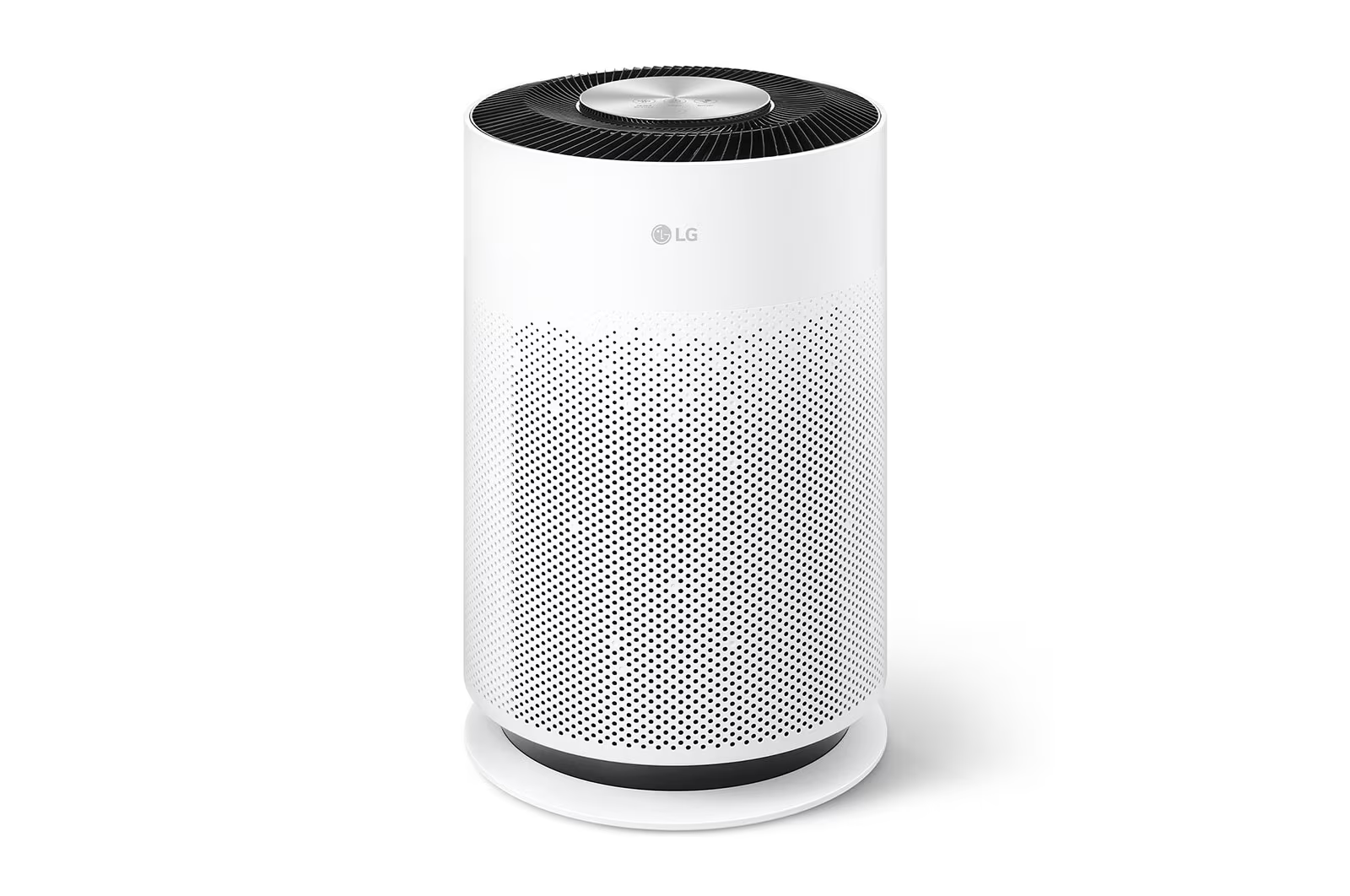
Choose LG if you want H13 HEPA filtration with included maintenance and no upfront cost. LG Subscribe is the only option among the three that bundles filters, warranty and servicing into one monthly payment. The 360 HIT at RM50/month and the AeroBooster at RM65/month offer the quietest operation in this comparison and the most hands-off ownership experience.
The honest summary
There is no single "right" brand. Xiaomi wins on price. Dyson wins on design and dual-function (fan + purifier). LG wins on noise, subscription convenience and total cost of ownership when you factor in maintenance.
For Malaysian households that want clean air during haze season without thinking about filter schedules, LG Subscribe is the most practical path. For buyers who want the cheapest effective option and are happy to manage maintenance, Xiaomi delivers.
Related reading
Next step
If you want to compare specific LG models for your room size, or if you are weighing LG Subscribe against buying a Dyson or Xiaomi outright, message us on WhatsApp. We will give you an honest cost comparison based on your actual usage — no spin, just the numbers.
Get a plan recommendation tailored to your home.
Chat with our LG Subscribe consultants on WhatsApp. We'll walk through your needs and send a quick recommendation with no pressure to commit.