
LG vs Samsung Washing Machine Malaysia: Honest Comparison for 2026
Most Malaysian washer buyers cross-shop LG and Samsung. The brands look similar, but the engineering choices are different. We compare AI Direct Drive vs Ecobubble, warranty terms, real wash times and TNB cost — for both top-load and front-load.
LG and Samsung dominate Malaysian washing machine sales. Walk into any retailer and the two brands take up most of the wall. Most buyers compare side-by-side and find the marketing too similar to choose with confidence. This post puts both brands on the table for the criteria that actually decide longevity, performance and running cost.
Motor: AI Direct Drive vs Digital Inverter
This is the most important engineering difference between the two brands.
LG AI Direct Drive (AI DD) is a direct-drive motor — the motor is connected directly to the drum, no belt. Fewer moving parts, less vibration, longer expected lifespan. LG offers a 10-year warranty on the AI DD motor, which is the longest in the category.
Samsung Digital Inverter uses a belt-driven motor with inverter speed control. Samsung's standard motor warranty is 10 years on most front-load models — competitive with LG.
In practice, direct-drive motors run quieter and produce less vibration at high spin speeds. If your laundry area is adjacent to a bedroom (common in Malaysian condos), the difference is noticeable.
Both brands offer 10-year motor warranties on their respective core technologies. Outside the motor, standard parts warranty is 1–2 years.
AI features: pattern detection
Both brands use AI to detect fabric type and load weight, then optimise the wash cycle.
Samsung's AI Wash is more integrated with detergent dispensing — many Samsung models include AI-managed auto-dispense. LG offers auto-dispense on premium models but Samsung's implementation is more mature on mid-range units.
Wash technology: TurboWash vs Ecobubble
LG TurboWash 360 uses six-point spray nozzles around the drum to pre-soak detergent through the entire load before agitation. The marketed result is a faster wash cycle — a 59-minute "TurboWash" cycle for a full load.
Samsung Ecobubble pre-mixes detergent with air and water before injection, creating fine bubbles that penetrate fabric faster, especially in cold water. Samsung's cold-wash performance is the brand's strongest claim.
In Malaysian conditions — warm tap water year-round, mostly cotton and synthetic loads — both technologies work well. The Ecobubble cold-wash advantage is more meaningful in temperate-climate homes that wash cold to save energy. In Malaysia, where mostly warm-cycle washing is standard, TurboWash's speed advantage is more relevant.
Spin speed and dryness
Both brands offer up to 1,400 RPM on premium front-load models. At 1,400 RPM, clothes come out roughly 50% moisture — about 30 minutes of air-dry instead of 90 minutes from a 1,000 RPM wash.
For Malaysian condo dwellers who air-dry on a balcony rack, higher spin speed cuts drying time in half during humid weather. Either brand works here.
TNB running cost
Both brands' inverter motors deliver similar energy efficiency. A typical 8 kg front-load running 4 cycles per week:
| Item | LG AI DD 1.5 / 9 kg | Samsung 9 kg Ecobubble |
|---|---|---|
| Energy per cycle | ~0.7 kWh | ~0.7 kWh |
| Water per cycle | ~55 L | ~55 L |
| Monthly electricity (TNB 2026) | RM5–7 | RM5–7 |
Running cost is essentially identical. The differentiator is upfront price and warranty terms, not monthly bill.
Noise
LG's direct-drive motor is quieter at spin than Samsung's belt-driven system. In a condo with a bedroom-adjacent laundry, this becomes the deciding factor for late-night washing schedules.
Measured at 1 metre during 1,400 RPM spin:
A 3 dB difference is the threshold of perceptible loudness difference. In practice, LG's spin sounds less aggressive.
WashTower vs side-by-side
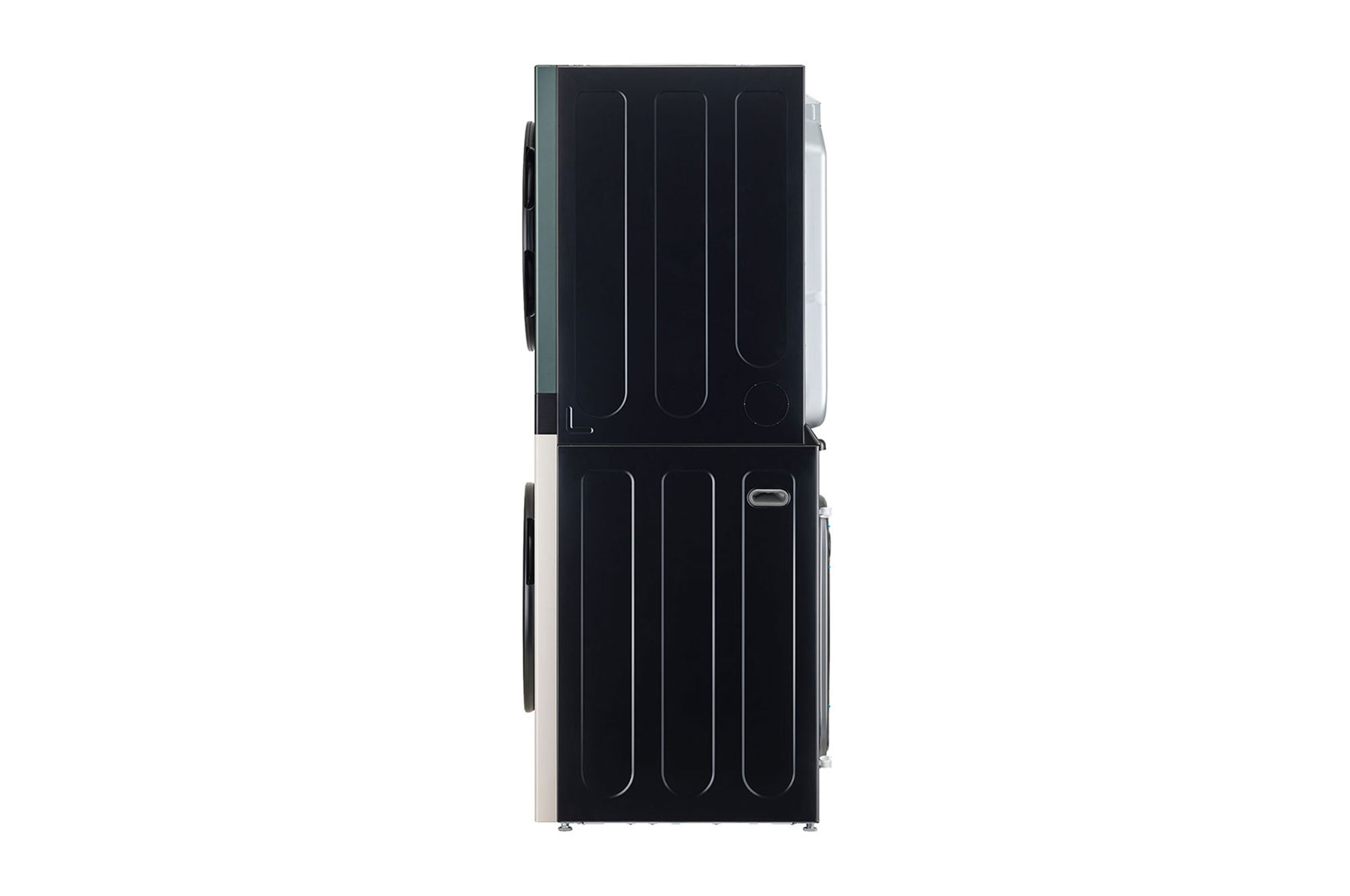
LG offers the WashTower — an all-in-one stacked washer-dryer combo built as a single unit. The control panel sits at chest height between washer and dryer, so you do not have to bend over for either.
Samsung offers a similar stacked configuration but typically as separate stacked units with a coupling kit, not a single integrated tower.
For households with limited laundry space, the LG WashTower's integrated design saves vertical space and offers single-control operation. This is a meaningful differentiator if you have a small laundry yard or balcony washer-dryer setup.
Service and parts availability
Both brands have nationwide authorised service in Malaysia. Practical reality:
For warranty repairs, both are competent. For out-of-warranty repairs in years 7–10, LG's longer motor warranty bridge is the advantage.
Pricing pattern
Both brands tier their lineup similarly:
Promotional pricing varies. Neither brand consistently undercuts the other on equivalent models.
Subscription advantage
LG Subscribe is the structural differentiator. Samsung does not currently offer an equivalent subscription model in Malaysia. The LG Subscribe plan bundles installation, servicing and replacement during the term, with no upfront cost.
For buyers who would otherwise finance through a 24-month instalment, the subscription is usually cheaper and lower-risk because servicing is included.
Which one to pick
For Malaysian conditions and the most common buyer use case (warm wash, mostly cotton/synthetic, weekly schedule), the brands are 85% equivalent. The deciding factor is usually subscription availability and the laundry-space form factor (WashTower or not).
Related reading
Next step
Stuck between LG and Samsung for your next washing machine? Message us on WhatsApp with your laundry frequency, family size, and whether you have space for a separate dryer or need a stacked configuration. We will tell you honestly which brand wins for your specific use case.
Get a plan recommendation tailored to your home.
Chat with our LG Subscribe consultants on WhatsApp. We'll walk through your needs and send a quick recommendation with no pressure to commit.